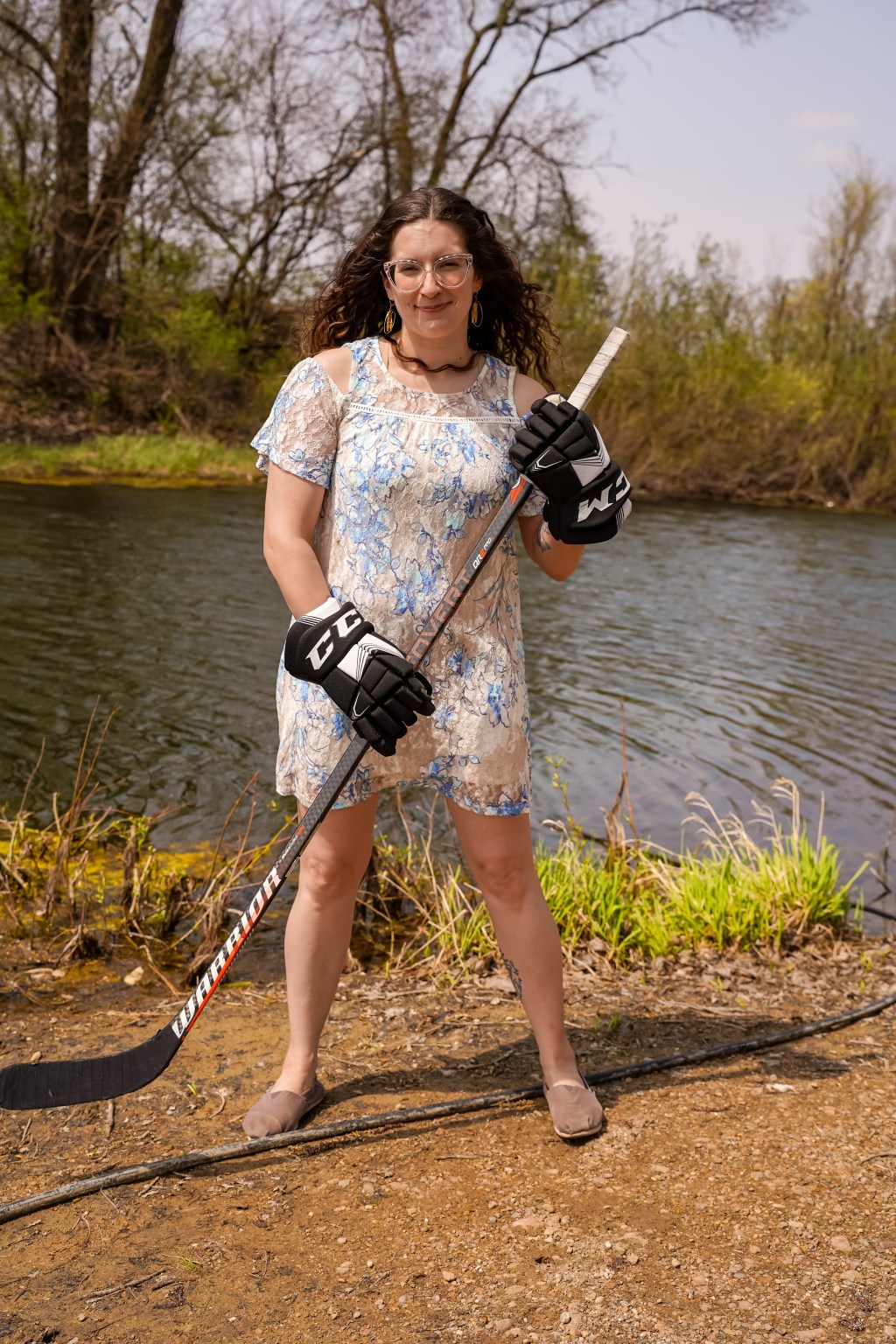
For me, bravery isn’t something you’re born with or something that’s inherently a part of who you are- it’s a learned skill. The title of this post might seem contradictory: if I believe that bravery is a learned skill, then wouldn’t “getting brave” be an accurate depiction? Kind of, but “getting brave” implies that I am not, in fact, already brave.
The thing is, I am Brave. I’ve spent the past 11 years learning to be brave through my actions, persistence, and vulnerability. I have moved halfway across the United States. I have unlearned harmful behaviors and thought patterns, rewired my brain, and confronted my trauma. I have completed both undergraduate and graduate degrees as a first-generation college student. I have traveled to foreign countries alone, learned a new language as an adult, and I’ve had the pleasure and honor of becoming a mother to two beautiful children whom I didn’t bring into this world. I’ve learned to play ice-hockey as an adult (yes- full pads and everything), and perhaps most significantly, I have opened my heart to new people and supports, despite the deep harm that was done to me. Each of these acts has been a brick laid in the foundation of the bravery I claim today.
Still, bravery doesn’t mean I don’t feel fear. In fact, I frequently identify as a recovering perfectionist. Webster’s dictionary defines perfectionism as “a disposition to regard anything short of perfection as unacceptable”. Whether it was gymnastics or the high expectations I put on myself as a child, I once believed that perfection was the prerequisite for love, care, and belonging. Fear and self-doubt were constant companions- but more recently, I’ve learned that courage and fear can coexist.
That’s why, the bravest thing I do isn’t any single event or accomplishment- it’s the conscious decision I make, day after day, to show up anyway. I am scared more often than I’d like to admit or probably should be, even still 11 years later. But the thing about me now is: I do it scared. That is what makes me brave. The fear doesn’t disappear, but my response to it has changed. I no longer let that stop me. The difference between the “me” I used to be and the “me” I am today is that I choose to act anyways, even when, and especially when I’m afraid.
This transformation didn’t occur in a vacuum, and it certainly hasn’t been without setbacks. I credit so much of who I am today to the people in my life who modeled what it means to live with integrity, resilience, and love. My maternal grandmother and my older brother were the first to show me the value in doing right by yourself and others. Their examples laid some groundwork, and over the years, I’ve been fortunate to find others who have continued to reflect back the kind of person I strive to be.
And beneath all of this—beneath the moves, the milestones, the degrees, and the personal growth—is something I don’t take lightly: I am a survivor of childhood sexual abuse. That experience shattered my sense of safety before I even had the language to understand what was being taken from me. For a long time, silence felt like the only option. But learning to name the truth, to speak it out loud, and to begin the lifelong work of healing has been one of the bravest journeys of all. Surviving that trauma didn’t make me brave on its own, but choosing to face it, to heal, and to live fully despite it? That’s where bravery was born.
So when doubt creeps in or someone underestimates me, I don’t argue. I act. Think I won’t? Watch me.
 Finding Taylor
Leave a comment